

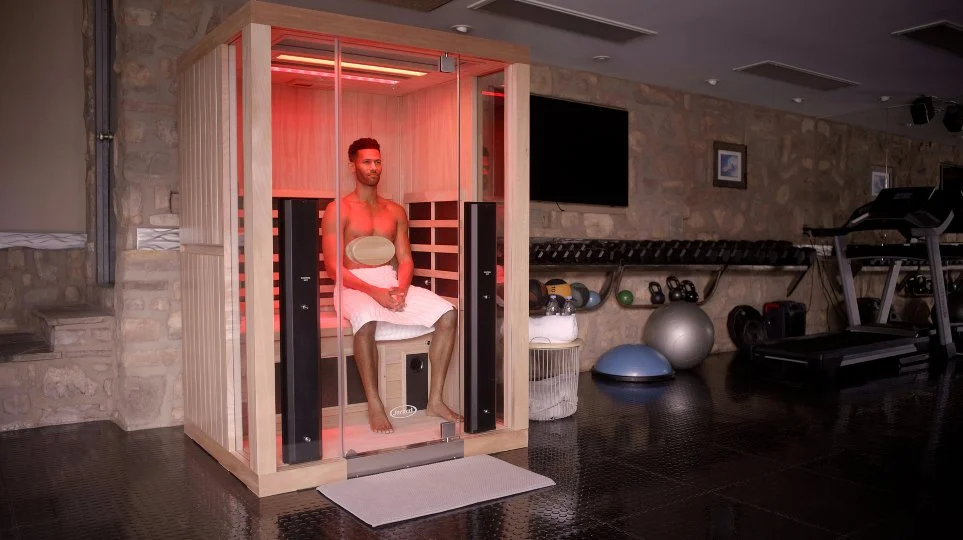
An infrared sauna warms your body directly with infrared light rather than superheating the air. This gently raises core temperature, increases heart rate, promotes sweating and relaxation. Many people use them for recovery, stress relief and a quieter, more relaxed mind. The detail matters, from the wavelengths used to how you structure a session. This guide sets out what actually happens, what you may feel, benefits and limits, safe use, and the features that shape the experience.
The short answer
Infrared heaters emit invisible light that your skin and tissues absorb as heat. Your body responds with thermoregulation, so blood vessels widen, circulation increases, and sweat glands activate. You feel comfortably warm at lower cabin temperatures than in a traditional sauna, which is why many users find infrared easier to tolerate for longer. The combination of heat and rest can loosen muscles, reduce perceived soreness, calm the nervous system and help you unwind.
How infrared heat interacts with the body
Infrared describes a band of light just beyond visible red. Infrared saunas typically use a mix of near infrared, mid infrared and far infrared. Near infrared is linked with surface warming in skin. Mid infrared contributes to a deeper warming sensation through soft tissues. Far infrared is most often used for whole body warmth and sweat. Tissue absorbs this light and converts it to heat. Sensors in the skin respond, your body adjusts automatically, and blood flow to the skin increases to help manage temperature. Heart rate rises modestly, similar to a gentle walk, while the warm environment encourages muscle relaxation. The overall effect is a steady, even warmth that feels more direct than hot air alone.
Some cabins also include visible deep red light. This is separate from heat and is often combined with infrared to support comfort and skin appearance.
 Infrared compared with traditional saunas
Both styles produce purposeful heat stress, but they do it differently. A traditional sauna heats the air to a high temperature, often 75-90°C, then your body warms via hot air, steam and radiant heat from the stove and surrounding surfaces. Infrared units run at lower cabin temperatures, typically around 45-60°C, because more of the warmth is delivered directly to the body by light.
For many people, this means the first 10 minutes feel gentler because you are not hit by very hot air on entry. You can achieve a strong sweat at lower air temperatures once your core has risen slightly. Sessions can often be longer and more comfortable, as the heat feels less aggressive on the lungs and skin. Preference is personal. If you enjoy the blast of a traditional sauna and the ritual of steam, you may keep both in your routine. If you prefer a calmer warmth that builds steadily, infrared can fit well at home.
What you are likely to feel during and after a session
Early in a session, you feel a dry, pleasant warmth. Muscles often slacken a little as your circulation opens up. Breathing usually feels easy because the air is not very hot. After several minutes, sweat beads on the skin and then run more freely. Your heart rate ticks up, which is normal. Many people describe a loosening through the lower back, hips and shoulders as the heat penetrates.
Afterwards, a short cool down and a shower help you feel fresh rather than heavy. Many people feel calm and clear and find it easier to transition into sleep later in the day. If you have sat in one position, tight areas may feel floppy or pleasantly tired in the hours after.
Potential benefits explained responsibly
Relaxation and mood: Warmth, quiet and time with no demands can help the nervous system shift towards rest. That alone often improves perceived stress levels and sleep quality.
Everyday aches and muscle recovery: Heat can reduce perceived muscle soreness and stiffness, especially after training or a day of physical work. Increased blood flow supports normal recovery processes, and the warmth helps tight muscles let go.
Joint comfort and flexibility: Gentle, even heat can make movement feel freer. People with non-acute joint stiffness often report an easier range of motion after a session.
Circulation: Vasodilation increases blood flow near the skin and through muscles. This is part of normal heat adaptation and may leave hands and feet feeling warmer.
Skin appearance: Sweating helps lift surface oil and debris. Where red light is present, some users notice smoother skin tone over time. This relates to light interacting with skin at a cellular level, separate from heat.
These outcomes are common experiences, not guarantees. Infrared heat is not a medical treatment or a cure for health conditions. Treat an infrared sauna as a wellness tool that can complement healthy habits.
What infrared does not do
Setting clear expectations helps you get the best from a sauna. It is not a fat loss shortcut. You may lose water weight through sweat, which returns with normal hydration. Sustainable changes to body composition come from diet, activity and sleep. It is not a detox cure. Sweating is one of the body’s normal excretion routes, but your liver and kidneys do the main work. Think of a sauna as supporting natural processes, not replacing them. It does not fix injuries on its own. Heat can ease discomfort and stiffness, but proper diagnosis, rehab and medical care remain essential if you are injured or unwell. It does not suit every person or every day. Heat tolerance varies, and some conditions require medical guidance first.
Safety, risks and who should check with a clinician
Infrared saunas are generally well tolerated, but heat is still a controlled stress. Use sensible precautions.
Hydration: Start hydrated and sip water if you need it. Replace fluids after your session.
Heat sensitivity: If you feel lightheaded, overly hot or unwell, end the session and cool gradually.
Alcohol and big meals: Avoid alcohol and heavy food before a session. Both can increase the risk of dizziness or nausea.
Medications and conditions: If you have cardiovascular disease, low blood pressure, unstable angina, a pacemaker or other implanted device, are pregnant or planning pregnancy, or take medications that affect heat responses, speak to a healthcare professional before use.
Children: Young people regulate heat differently. Seek appropriate advice and consider shorter, cooler sessions if permitted.
Skin products: Avoid heavy lotions before a session, which can block pores and reduce comfortable sweating.
Use the cabin within the ranges set by the manufacturer and allow time to cool down and rehydrate.
 Practical use, settings and session structure
A consistent, simple routine works best for most people. Build up gradually and aim for regularity rather than intensity.
- Preheat and prepare: Warm the cabin for 10-20 minutes, set a comfortable target, and bring a towel for the bench and one for sweat.
- Start short: Begin with 10-15 minutes at a lower temperature if you are new, then extend towards 20-30 minutes as you learn your limits.
- Breathe and relax: Sit or recline comfortably, breathe through the nose if you can, and let your muscles soften.
- Finish well: Step out slowly, sit for a minute if you feel floaty, then take a lukewarm or cool shower.
- Rehydrate and rest: Drink water and give yourself a few minutes before you rush back to a demanding task.
Three or four sessions a week suit many routines. Some prefer daily shorter sessions. The right cadence is the one you can maintain without feeling drained.
Features that shape the experience
The way a cabin delivers heat and light changes how a session feels. Understanding key terms helps you choose and use them well.
Full spectrum vs far infrared: Full spectrum cabins include near, mid and far infrared. This provides a broader profile of warmth and can combine surface comfort with deeper heat. Far infrared only models focus on the longer wavelengths, most associated with whole body warming and sweat.
Heater placement and coverage: Heaters to the sides, back and front help surround the body evenly. Front-facing panels reduce the cool sensation at the chest and shins that you may notice in designs with only side and rear elements.
EMF design: Look for cabins designed to keep electromagnetic field exposure low at the user position. This is a design choice, so it is worth checking with a reputable brand.
Red light and chromotherapy: Deep red light is visible, separate from infrared heat. It is often included in overhead light bars for skin-focused sessions and can be used alongside heat. Chromotherapy is coloured visible light, used for ambience and mood. These do not replace heat; they add to the experience.
Build quality and comfort: Solid timber, secure hinges, thick glass, a comfortable bench and readable controls all help with quieter, more durable use. If you want to understand why Bedfordshire Hot Tubs partners with Jacuzzi for wellness, see our overview of why Jacuzzi and what that means for quality and support.
Home installation and maintenance basics
Most modern infrared cabins are designed for domestic spaces, but a few fundamentals make ownership smoother.
- Location: A dry, level floor with enough clearance to assemble the panels and room to sit or recline comfortably. Avoid damp areas unless the cabin is specified for it.
- Electrical supply: Follow the manufacturer’s electrical requirements. Smaller cabins may use a standard socket; larger units may require a dedicated circuit. Use a qualified electrician for any new supply and ask our team if you are unsure.
- Ventilation: Infrared cabins do not need active extraction like a steam room, but normal room ventilation helps manage humidity from sweat and post-session showers.
- Cleaning: Wipe benches and backrests after use, launder towels promptly, and use gentle, non-bleach cleaners that are safe for timber. Leave the door ajar for a short time after a session so residual moisture can dissipate.
- Ongoing care: Check fasteners and hinges periodically, keep the control panel clean and dry, and follow any manufacturer guidance on light modules and heater surfaces.
If you would like advice on suitability for a specific room or power supply, contact Bedfordshire Hot Tubs, and we will help you plan a smooth installation.
Evidence snapshot and what research suggests
There is growing interest in heat therapy. Small clinical studies and observational work have explored heat exposure for perceived pain relief, recovery, quality of sleep, cardiovascular markers and mood. Findings often show improvements in self-reported wellbeing, muscle soreness and stiffness, with some positive signals for cardiovascular health markers in heat routines more broadly. Protocols differ widely, though, from temperature and duration to the number of weekly sessions, and not all results generalise to every person.
What does this mean for you? Treat an infrared sauna as a helpful part of a wider routine that includes movement, nutrition and sleep. Use it consistently for a few weeks, notice how your body responds, and adjust time and temperature to suit. If you have a medical condition or symptoms you are concerned about, speak to a clinician for individual advice.
Choosing an infrared sauna wisely
A few simple criteria make comparison easier and reduce the chance of buying twice. Decide which heat system suits you, either full spectrum or far infrared only, and look for even heater coverage, including the front. Check cabinet timber quality, glass thickness, hinges and overall fit, which all affect durability and quietness. Look for a sensible, low EMF design from reputable manufacturers and safety features such as over-temperature protection. A supportive bench, readable controls, preset programmes and useful extras such as a good sound system improve real-world use. Finally, a meaningful warranty and local support make long-term ownership easier.
Frequently Asked Questions
What sizes are available in the Jacuzzi infrared sauna range?
Bedfordshire Hot Tubs supplies one-person, two-person and three-person Jacuzzi infrared saunas, so you can choose a footprint that suits your space and routine.
Do the saunas include red light or chromotherapy?
Yes. The Jacuzzi infrared sauna range we supply includes overhead deep red light bars and chromotherapy lighting, so you can combine heat with visible light options during a session.
What power supply will I need at home?
Electrical requirements vary by model. Many domestic infrared cabins can run from a standard socket, while larger units may need a dedicated circuit. We will confirm the exact requirement for your chosen sauna and can liaise with your qualified electrician if needed.
What warranty is provided with Jacuzzi infrared saunas?
Jacuzzi infrared saunas supplied by Bedfordshire Hot Tubs carry a five-year parts and labour warranty for peace of mind.
Can I try an infrared sauna before I buy?
Yes. You can arrange a visit to our showroom to discuss the range and, where possible, experience the controls and features in person. Contact our team to book a time.
Explore full-spectrum infrared options
If you would like to see how full-spectrum heaters, deep red light and thoughtful build quality come together in practice, explore the latest Jacuzzi infrared saunas with Bedfordshire Hot Tubs. The range and specification details are set out here: Jacuzzi infrared saunas at Bedfordshire Hot Tubs, including sizes for one, two or three people and the key features that shape the session. Visit the dedicated page to compare models and understand the options.
Get in touch with our team if you would like help choosing a size or to discuss installation at your property, or read more about why Jacuzzi is our chosen wellness partner.

